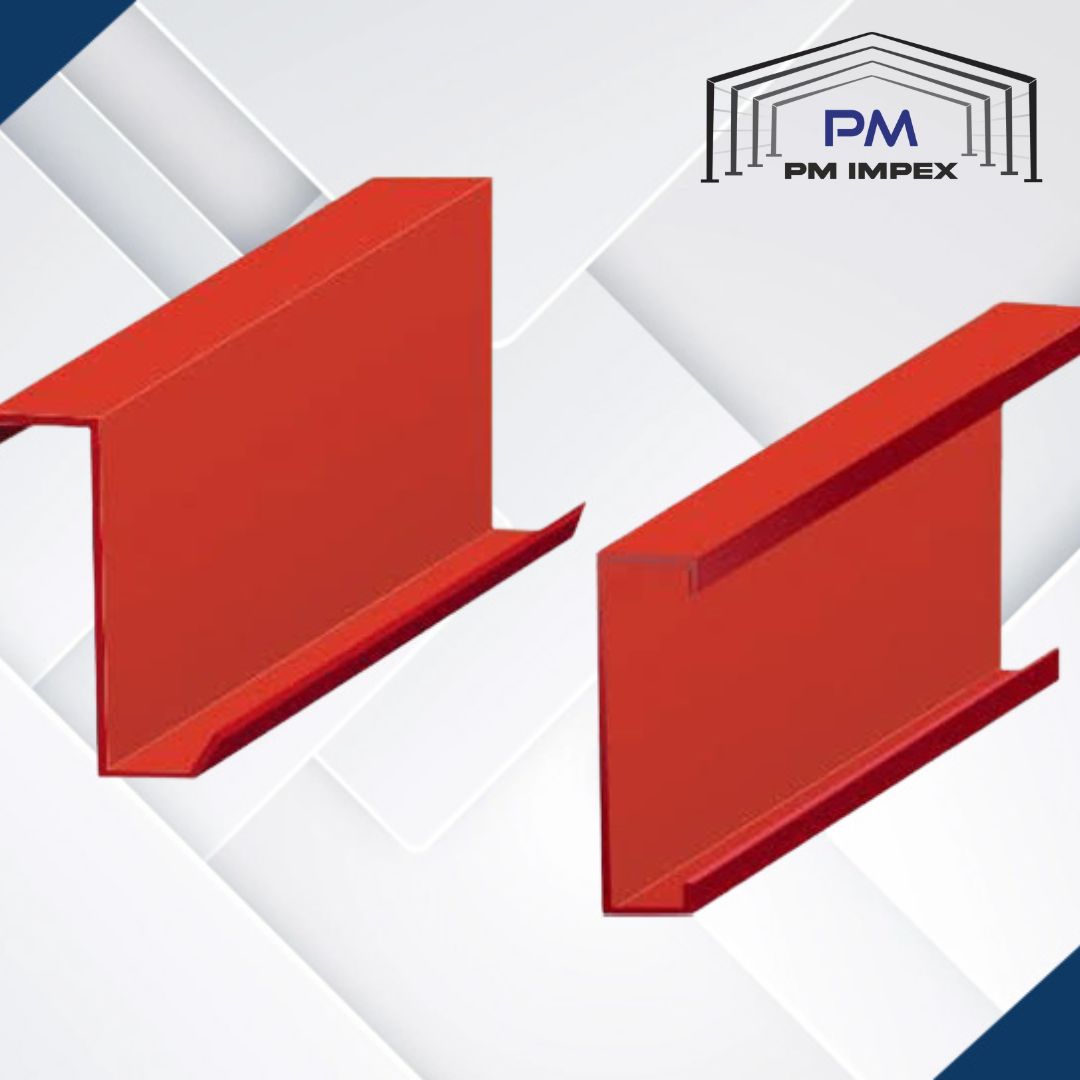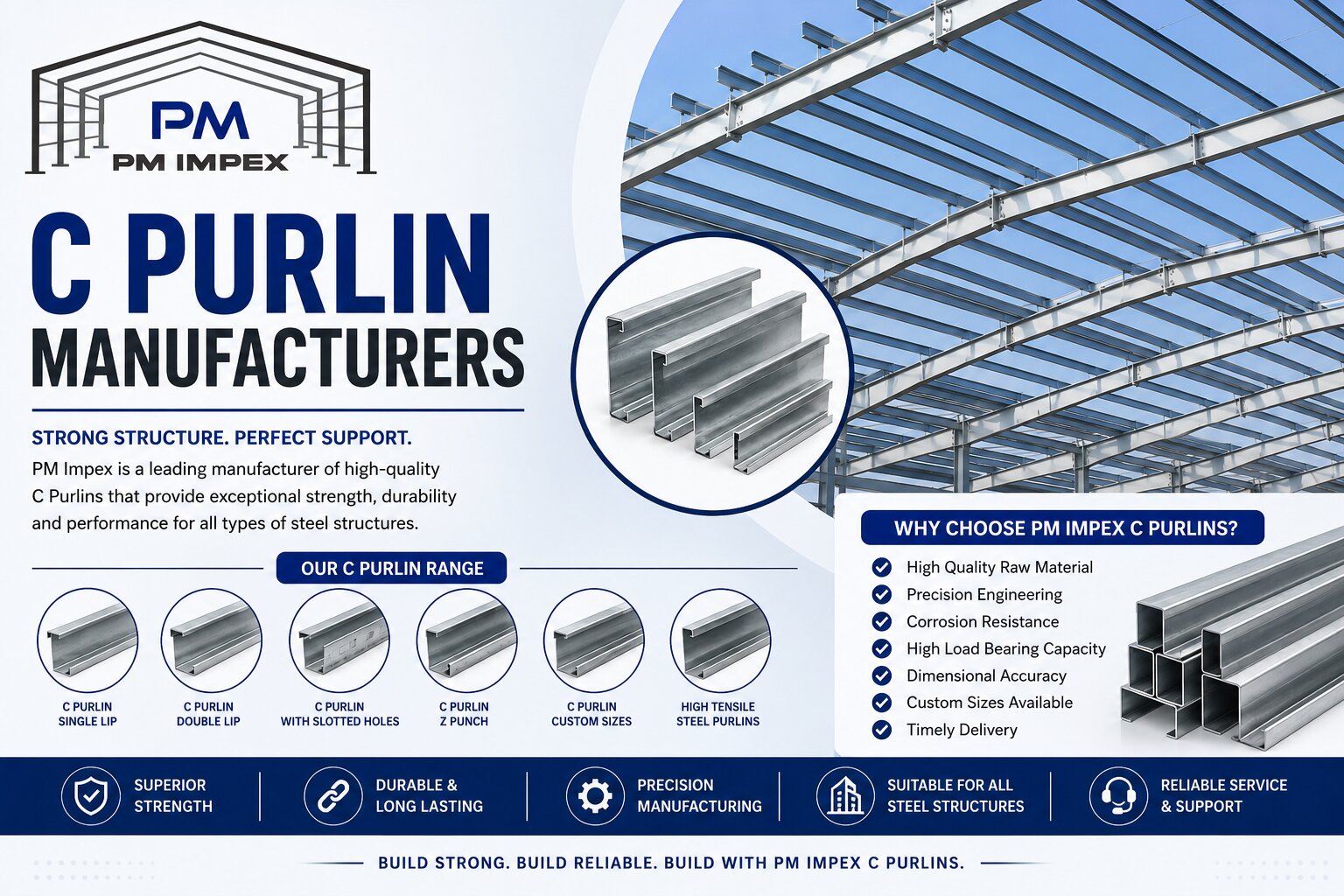
When dealing with steel construction, one should remember that a C purlin’s quality has to do with more than just the steel grade used for its production. The way it is manufactured also influences its size accuracy, structural effectiveness, time required for its installation, as well as the overall cost of the project. This is why most C purlin manufacturers prefer to use roll-forming instead of traditional methods of fabrication. This technology allows producing all the items with high precision, thus no adjustments are needed.
What Is Roll-Forming of Steel
Roll-forming refers to a continuous method of production wherein a steel coil goes through a series of rollers. Rather than being shaped at once, it is shaped gradually. The main difference between roll-forming technology and using the press brake technology is that the latter is not continuous and always requires a break after each new component is produced. Roll-forming works continuously, producing finished sections one after another without stopping after every component. It is a manufacturing process that can deliver thousands of identical components without sacrificing quality, giving both manufacturers and customers a clear advantage.
Benefits of Roll-Forming for C Purlin
Excellent Dimensional Accuracy
If there were a discrepancy of just a few millimeters this would create difficulties in installation. Roll-forming technology eliminates almost all the discrepancies as steel moves along the same roller during the entire process of manufacture. Once the machinery is calibrated, every C purlin will be produced with a constant depth, flange width, lip size, and shape. This is one of the main reasons why many C purlin manufacturers prefer to use state-of-the-art roll-forming machinery.
High Production Efficiency
Roll-forming makes the process of manufacturing economically favourable. Once the coil is in the machine, it keeps manufacturing sections until all required products are ready, because the cutting is carried out with the help of automated systems. As a result, roll-forming provides faster production, shorter time of delivery, and more efficient production planning.
Minimal Waste
Roll-forming uses steel coils instead of separate sheets for manufacturing. Thus, the manufacturing process becomes much more efficient while allowing producers to be in control of manufacturing costs without compromising on the quality of the product.
High Structural Strength
Roll-forming bend the steel gradually instead of forcing it to deform more suddenly. Whether they are part of roof systems, wall coverings, or secondary supports, the behaviour of roll-formed C purlins under various loads is trustworthy. One of the reasons why C purlin manufacturers for building and industrial construction prefer roll-forming is that it allows them to produce purlins in large quantities.
Smooth Surface Finish
Smooth surface appearance is much more than just appearance. It affects the corrosion protection, the efficiency of coatings, and the installation. Due to the fact that steel passes through polished rollers under precisely controlled pressure, the profile produced is clean and uniform. Galvanized layer remains almost entire during the process.
Conclusion
For the above-mentioned reasons, roll-forming is the best way to produce C purlins, due to the efficiency of the process. Compared to the traditional methods of production, this method ensures higher output, uniform size, minimal waste, and reliable strength. For builders, this means simpler assembly and less on-site work and for producers, higher efficiency and lower expenses. As construction projects continue to demand faster execution and higher quality standards, it is clear why leading C purlin manufacturers continue to invest in advanced roll-forming technology.
We at PM Impex fabricate our C purlins using mild steel or galvanized steel by the roll forming technique. If you want to buy from us, explore our collection of customizable purlins.