
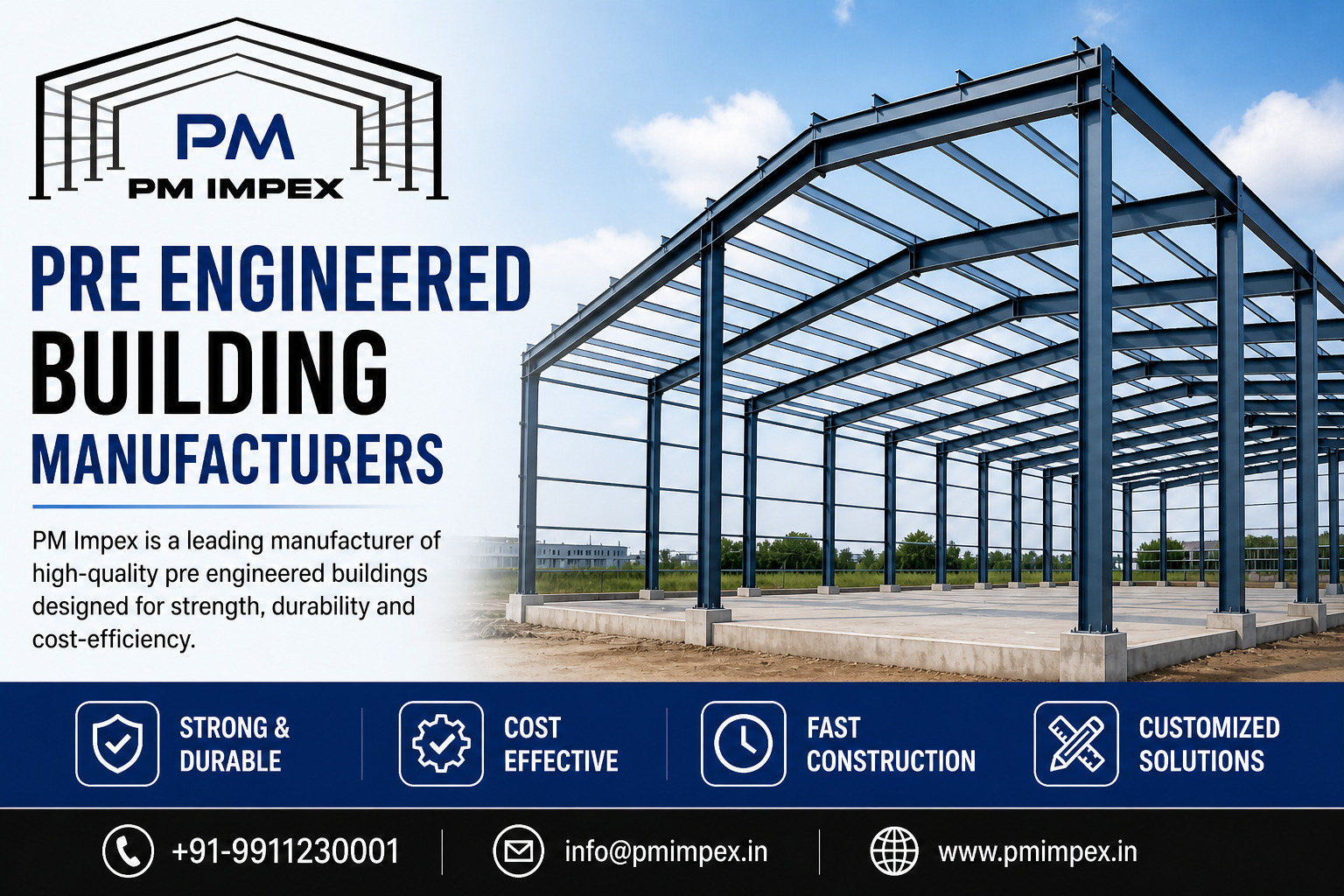
The structural frame is the first element of the pre-engineered building. The steel skeleton of the building must be strong enough to bear the loads placed on it before the roof sheet, insulation, drainage system, and other components can be installed.
Built-up sections are made by assembling different steel plates into engineered steel structures. Such sections can be manufactured in any dimensions required by a specific project. Therefore, Built-up sections provide pre engineered building manufacturers with plenty of opportunities to construct buildings of various spans, heights, and loads.
What Are MS Built-Up Structures?
Mild steel built-up structures are the structural steel members made by joining plates together to create parts such as columns and beams. A regular built-up member consists of a web plate and two flange plates. The size and thickness of the plates depend on structural calculations carried out. Its geometry is developed according to factors such as:
- Building span and bay spacing
- Structural loads
- Wind loads
- Roof and wall loads
- Building height
- Crane loads, where applicable
Role of MS Built-Up Structures in PEB Manufacturing
For the pre-engineered building manufacturers, it is important to properly make these members because the primary frame determines the shape of the building and provides the load path.
Columns and Rafters
Built-up columns bear the loads coming from the roof and from interconnected structures. Their dimensions and plate thickness are determined by calculation.
Large-Span Industrial Buildings
Facilities that require large clear spans include industrial buildings such as factories and warehouses. Properly designed built-up structural members can help resolve the issues related to the large-span requirement while ensuring the correct performance of the structure.
Integration With Secondary Members
The primary frame does not work on its own, as it must also be connected to C &Z purlins, girts, bracing, cleats, etc. Purlins are responsible for supporting the roof sheeting and transferring all the loads to the primary frame, thus forming an integrated structure.
How Are MS Built-Up Structures Manufactured?
The finished structural member’s quality is reliant on the accuracy of the process of its fabrication.
1. Cutting of Plates
Steel plates are cut according to the drawings. The accurate cutting of plates gives the member its basic geometry.
2. Fit-Up and Assembly
Flange and web plates are positioned and aligned before the welding process. The correct fitting results in keeping the correct dimensions and alignment of the plates.
3. Welding
The plates are connected using a suitable welding method. The quality of the joints between the plates is crucial because the connection has to carry the loads applied by the designed member.
4. Inspection and Dimensional Control
Fabricated members are checked for dimensions, alignment, and quality of the weld. Ready-made sections are compared to the approved project drawings before the start of the following stages.
5. Surface Preparation and Protection
Depending on the requirements of the project, the fabricated steel may undergo surface preparation and a protective coating process.
Conclusion
Mild steel built up structures provide PEB designers and manufacturers with the opportunity to mold structural components according to the requirements of each specific project. They play a role beyond simply supplying steel. They create the fundamental framework used in carrying the load that supports the whole building system. When working with reputable pre engineered building manufacturers, the structural design, steel fabrication, and integration of secondary and roof items are assured to be organized throughout the entire process from the factory to the site. At PM Impex Pvt Ltd, we are well appreciated for our MS built-up sections and other structural components for pre-engineered buildings.

Leave a Reply